

 Home
Home


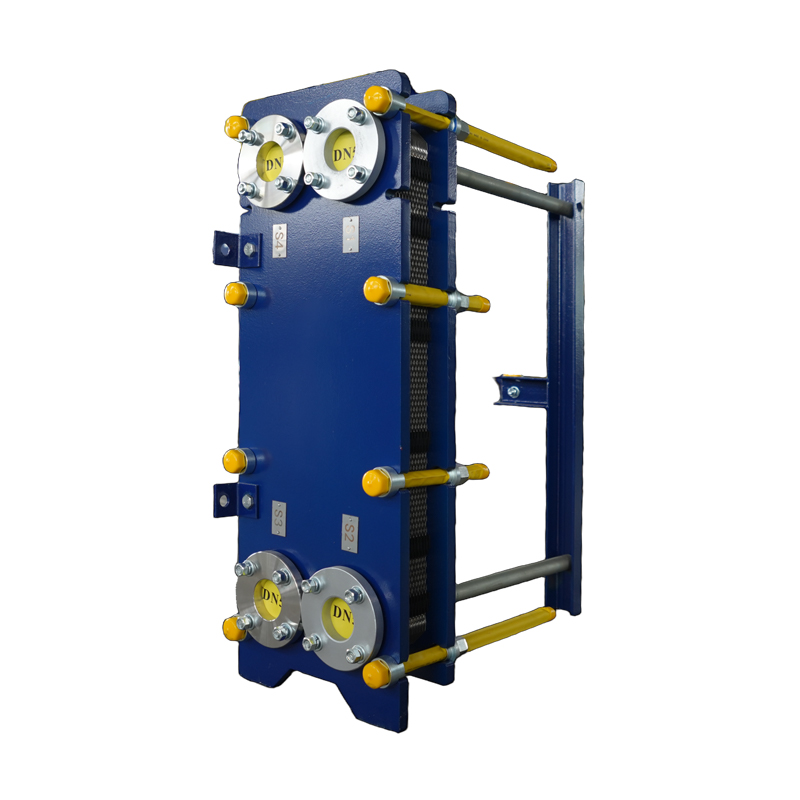
- Product Description
- Specification
- Our Factory
- Related Cases
- FAQ
-
What is plate heat exchanger working principle
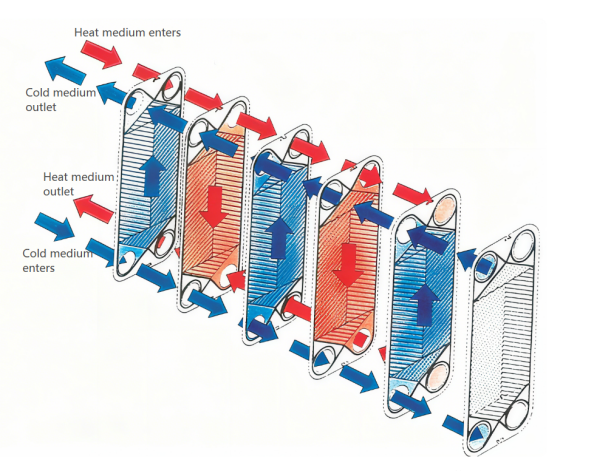
A plate heat exchanger consists of a series of metal plates, each featuring four corner ports that allow the passage of hot and cold media. During assembly, Type A and Type B plates are arranged alternately, forming a network of flow channels between them. Gaskets seal both media within the exchanger while effectively keeping them separated to prevent mixing. Within these channels, the cold and hot fluids flow in alternating passages, which can be configured for counter-flow or parallel-flow depending on requirements. As the fluids move through the unit, heat is transferred from the hot medium to the cold one through the plate walls, thus achieving the desired thermal exchange.
-
What is plate heat exchanger
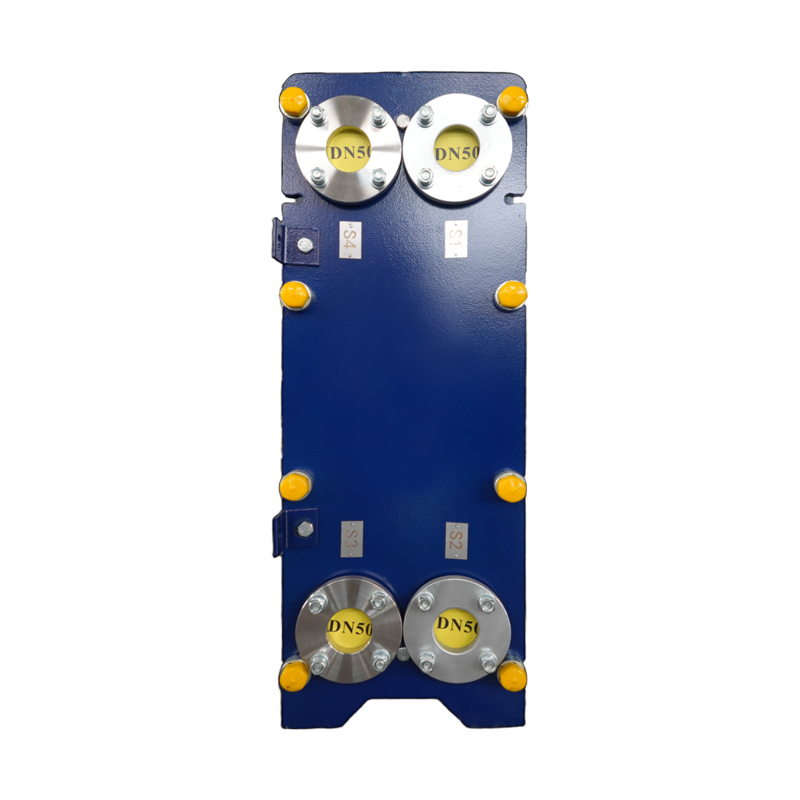
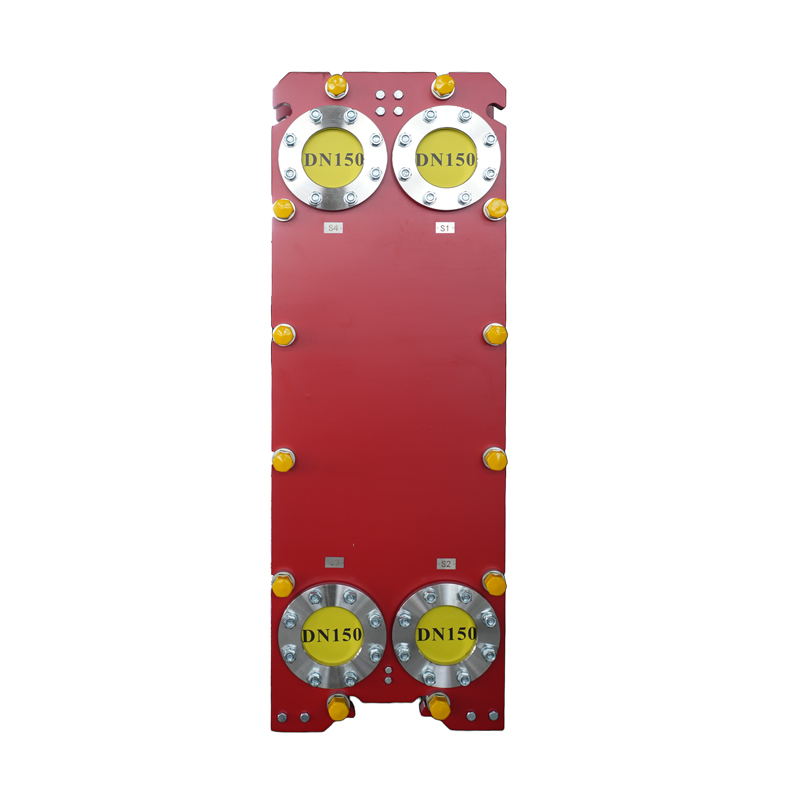
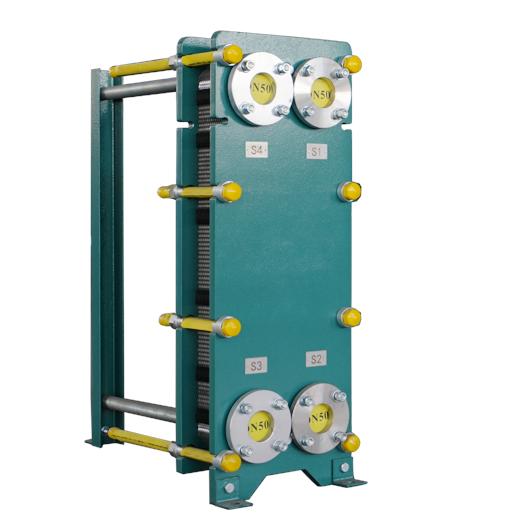
The detachable plate heat exchanger is primarily constructed from stamped corrugated metal plates, gaskets, and a frame. These plates are arranged alternately to form a network of fluid channels, allowing hot and cold media to transfer heat through the plate walls in counter-flow or parallel-flow configurations.
It achieves a heat transfer coefficient of 3000–4500 kcal/m²·°C·h, offers thermal efficiency 3 to 5 times higher than shell-and-tube heat exchangers, and requires up to 80% less floor space.
To enhance corrosion resistance, materials such as stainless steel or titanium alloy are used. The plate pack can be quickly disassembled and reassembled using clamping bolts. Together with drainage channels and replaceable gaskets, this design enables easy cleaning and maintenance.
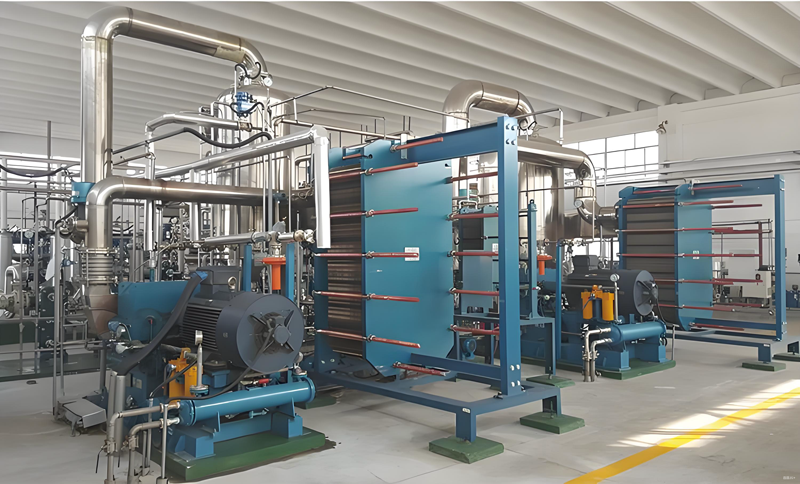
The unit supports flexible configuration of flow arrangements and heat transfer area, making it suitable for applications involving high temperatures (≤200°C), medium pressure (≤1.6 MPa), and corrosive media.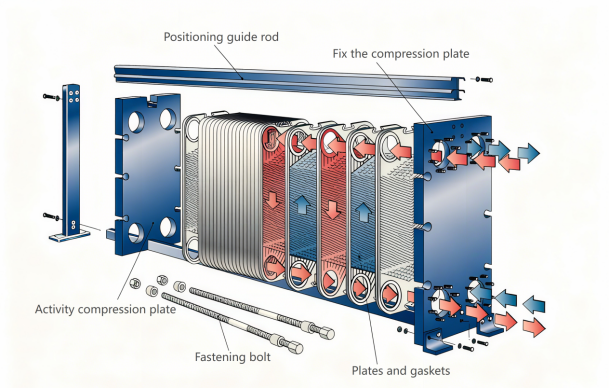
-
Why plate heat exchangers exchange heat efficiently?
Plate heat exchangers achieve high-efficiency heat transfer mainly thanks to their unique structure and working principle.
The corrugated plate design delivers two key benefits: it increases the contact area between fluid and plates, and promotes fluid turbulence—both work together to boost heat exchange efficiency.
Additionally, their compact structure means small footprint, light weight, and easy installation and maintenance.
-
Heat exchange principle
Single-flow structure: Only two plates do not conduct heat - head and tail plates

-
Double-process structure: Each process has three plates that do not conduct heat.

-
Adopt an automated production line
Improved Surface Quality
Automated robotic handling minimizes contact damage such as scratches, dents, and scuffs during loading, unloading, and transfer. This significantly enhances the surface finish and visual appearance of the gaskets.
High Dimensional Accuracy and Consistency
Cutting paths and process parameters are controlled by programmed settings. This ensures consistent size, shape, and cutting accuracy for each gasket, improving sealing performance and reducing variation between batches.
Higher Production Efficiency and Shorter Lead Times
Continuous automatic loading, unloading, and cutting increase production speed and reduce downtime between processes. This allows us to respond more efficiently to large orders and tight delivery schedules.
Stable Process Control and Lower Defect Rate
Key process parameters such as cutting speed, pressure, and path are monitored and kept stable through automated control. This minimizes quality fluctuations caused by human factors and reduces the rate of defects and rework.
Process Data Collection and Quality Traceability
The automated system records production parameters, equipment status, and batch information in real time. This enables effective quality tracing, problem analysis, and continuous process optimization.
Our Factory


Hainan Yongtuo Win-Win International Technology Co., Ltd.
Request A Free Quote/24H Services/Professional solutions
Welcome to contact us at any time. We will provide you with project plans, quotation requirements and cost assessment
-

-

-

-

Room 5091, Block A, Building 1, Phoenix Island, Sanya Central Business District, Tianya District, Sanya City, Hainan Province